Bridge Projects: How to Switch Creative Lanes Without Torching Everything You Built
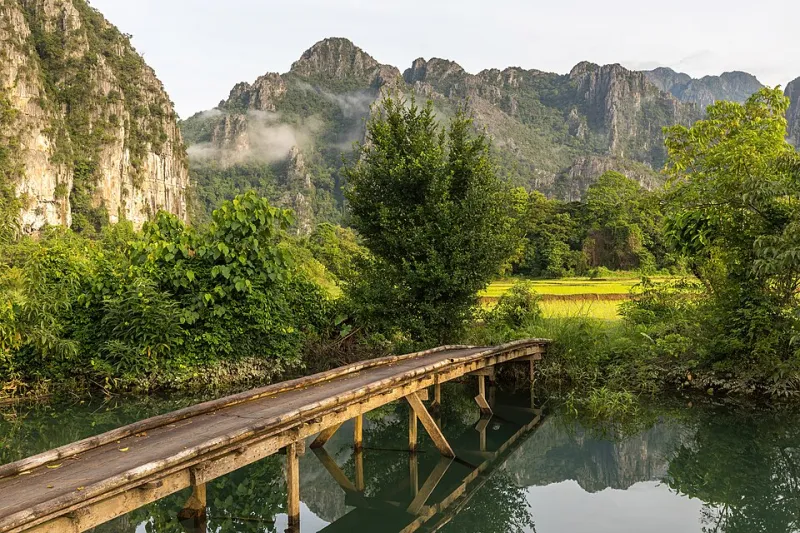
Photo: Basile Morin, CC BY-SA 4.0, via Wikimedia Commons
Every creative who's thought about changing direction has had the same nightmare. You've spent six years building a name in one lane — say, wedding photography — and now you want to make documentary films. If you pivot, do your followers come with you? Do clients who booked you for one thing trust you with another? Or do you have to nuke the account, start a new Instagram with zero followers, and grind your way back to relevancy?
Most people overcomplicate this. The answer isn't a dramatic announcement or a scorched-earth restart. It's a bridge.
What a Bridge Project Actually Is
A bridge project is a piece of work that sits between your old discipline and your new one. It's legitimate in both worlds. Your existing audience can enjoy it without feeling ambushed, and your new audience can discover you without needing a history lesson.
A session guitarist who wants to move into scoring films doesn't announce "I'm a composer now." They score a friend's short film — something small, real, and shippable. Guitarists respect it because the musicianship is obvious. Filmmakers respect it because, hey, the guy can score. One project, two doorways.
The writer who came up through journalism and wants to write novels? A longform personal essay in a big outlet is the bridge. The graphic designer eyeing motion work? An animated title sequence for a podcast they already love.
Signal the Shift Without Making a Speech
Here's the mistake I see constantly: the Big Pivot Post. "Big news, everyone — I'm officially transitioning to..." Nobody asked, and honestly, declarations make people skeptical. Audiences don't follow your announcements; they follow your output.
Instead, let the ratio do the talking. If you're a photographer moving toward video, just start slipping one video into every five posts. No caption explaining your journey. Then two out of five. Then most of them. By the time anyone notices, you've been a video person. The shift happened in the background, and nobody felt the need to file an objection.
This works because humans update their mental model of you slowly, through pattern recognition, not press releases. Give them the pattern.
Your Old Work Is a Launchpad, Not Luggage
Too many creatives treat their past as an embarrassment to be hidden — old portfolio buried, previous niche scrubbed from the bio. This is backwards, for two reasons.
First, your old audience is your warmest possible launch market. The people who loved your webcomics will at least try your graphic novel. Strangers won't. Crossing over with zero goodwill means starting from a cold start you don't need.
Second, cross-disciplinary credibility is a genuine edge. The filmmaker who spent a decade in music hears rhythm in a cut that other directors miss. The coder-turned-woodworker builds furniture with a precision that reads as a signature. Don't sand off the history that makes your new work different.
A Realistic Timeline
Bridges take about twelve to eighteen months to build, and that's fine. Here's the rough arc:
- Months 1–3: Learn the new craft quietly. Make bad things. Show nothing.
- Months 4–9: Ship the bridge project. One substantial piece that both worlds can enter through.
- Months 10–15: Shift your output ratio toward the new discipline. Update the bio — after the work supports it, not before.
- Months 16–18: Take the first paid gig in the new lane, even a small one. Money is the loudest signal, to others and to yourself.
The creators who pivot successfully aren't the ones with the boldest announcements. They're the ones patient enough to build a bridge and walk across it a dozen times before anyone realizes the road changed.